
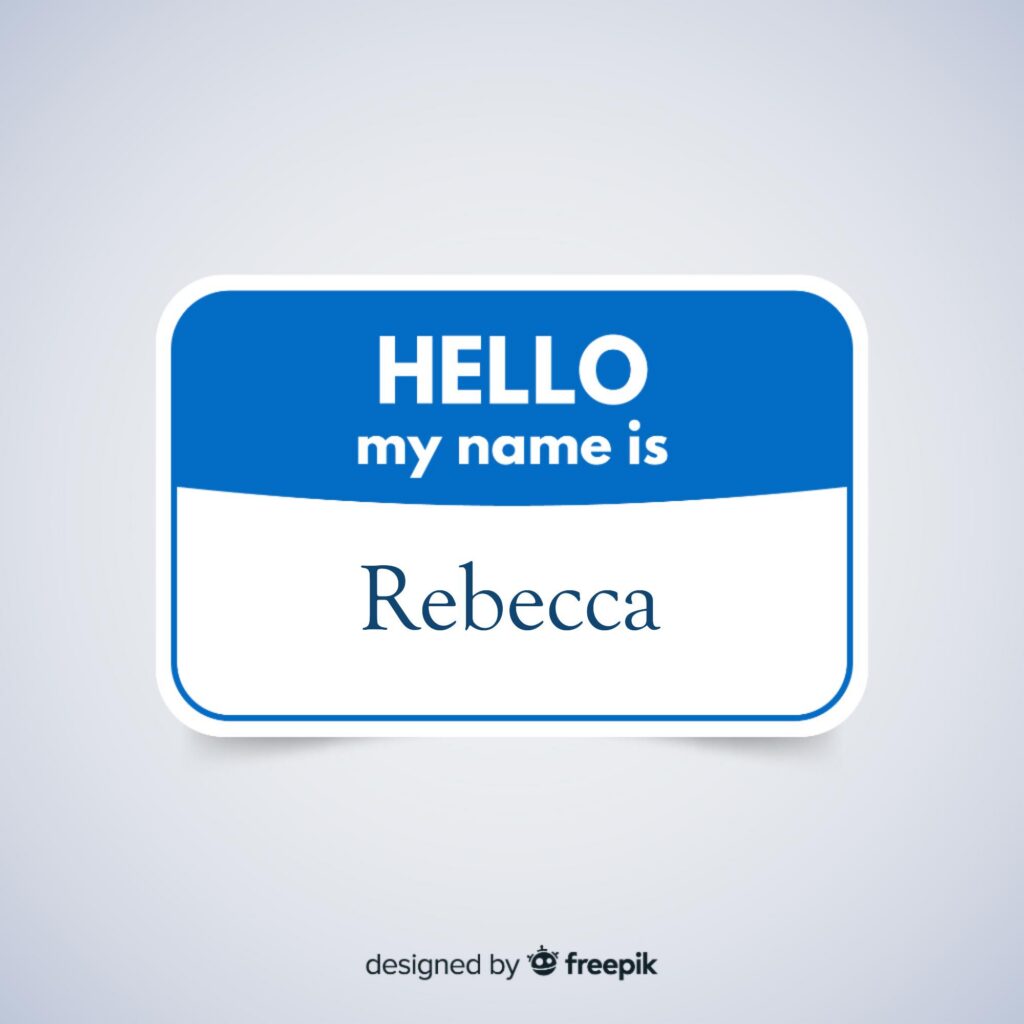
This is a personal story. An identity story. And a leadership story. It is about who defines us – and the clarity and groundedness we gain when we write our own definitions.
Many relational leaders, especially those attuned to other people’s well-being, become finely calibrated to others and lose parts of themselves. They read the room well. They notice what’s needed. And over time, that sensitivity can begin to shape how they see themselves, pulling them slightly out of alignment with their own inner sense of who they are.
That was true for me. I wasn’t without a sense of self—but I allowed certain definitions to take hold that, over time, no longer felt true. I can no longer organize myself around the question “Who do others need me to be?” The question must now be: “Who am I? Who do I want to be?”
This core identity question can no longer be answered by “Amy.”
My name is “Rebecca.” It always has been “Rebecca.”
Where did “Amy” come from? It was my mother’s name. And let me tell you, the confusion between us ran far deeper than figuring out who the phone was for. Like many mother-daughter relationships, there was very little room for me. For what I wanted. For what I liked. For what I thought. For who I am.
Our first identity is formed in the context of family. It’s where we learn not only who we are, but how much of ourselves is allowed. It’s where we first learn to read the room and calibrate ourselves to fit in. This pattern of adapting does not stay in childhood. It follows us.
Unless we identify these patterns – and revisit them – they quietly shape how we lead.
This is not just a personal question. It is a leadership question. Because the moment we look to others to define who we are, we also look to them to define our direction, our decisions, and our authority.
Claiming “Rebecca” has been a years-long journey, asking me to no longer tolerate someone else’s definition of me. Pushing me to get really clear on who I am and who I want to be. And to withstand the vulnerability that naturally comes with being seen for who I am. Dropping “Amy” from my name feels like a veil has lifted.
We don’t all change our names. But we are all called to claim our identity – especially if we are going to lead a team, an organization through the complexity and competing demands of our modern world.
What part of you is calling to be named? To be clarified? What have you learned to tolerate that is ready to be shed? What would it look like to reclaim something that is already yours?